Wednesday, April 17, 2024

One Album Wonders: The legend of Lakota


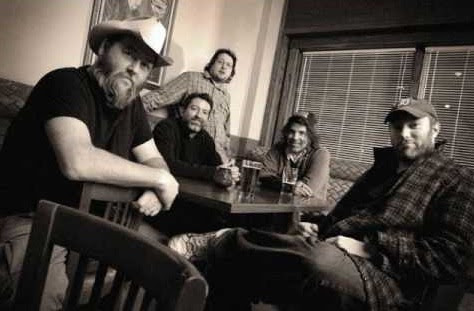
It seems that in the 1970s, every third band dabbling in country rock was named after a Native American tribe, a Native American chief or something other Native American-related. Some of these bands were more improbable than others. Such as one of the handful of bands named Lakota, this one being built around the songwriting, playing and singing of J.W. Grimm (not related to the famous Grimm brothers, as far as I know). These guys were called Lakota, using Native American imagery and came from the dusty plains and rocky canyons of...Long Branch, New Jersey. Lakota was essentially a two-person band: Grimm on lead guitar and lead vocals and J.T. Callahan on drums, percussion and harmony vocals. For their one and only album in 1979 they picked up help from William Sleight on Bass and Chris Norden on rhythm guitar. Published on JBS Records, only a few hundred copies of this crept out at the time. 1979 was of course a time by which country rock was entiely passé, so a straggler like this didn't have a chance. But how wrong people were! 

Unknown or little known country rock records are a dime a dozen and most of them probably deserve to await in attics or one dollar bins. But sometimes you can pull a diamond in the rough from out of that pile of obscure bands with country leanings and Lakota's self-titled album is such a case. It's an excellent listen all the way through, something that a lot of his peers in the genre didn't manage. Grimm was a really solid songwriter and performer. He also liked to play some loud rock guitar, as Lakota definitely come down more on the rock side of the country rock equation. So, if you're not that big on pedal steel and such, but like crunchy guitar and Southern Rock, you should definitely check this out as well. 

Speaking of Southern Rock, Grimm gets a little indulgent on "J.W. Crier", an almost seven minute extended rock jam, but unlike a lot of peers, he actually has the chops to pull it off. I personally am not a huge fan of jams, but I can groove with J.W. to J.W. Whether it's a beautiful country ballad like "Walking In The Rain" or a mid-tempo round-up like "Simple Wave", Lakota offers a constantly good listen. Actually, most songs are kept mid-tempo, giving the album a friendly, almost folk-rock-ish sound at times, as exemplified by the fantastic "If I Wanted To". 

'Nuff said, as they used to say at Marvel. Get this album and play it, it is definitely worth checking out and becoming part of your rotation. New Jersey Injuns rockin' your (virtual) turntable! Who'd have thought?   

Monday, April 15, 2024

Big Macs? That depends on who's cooking them...

Tribute albums by various artists are notoriously difficult to get right. Seeing how every artist is more or less left to their own devices, there is no unifying concept other than the songs itself. Maybe the sound and style of the original artist, but that wields its own set of problems, namely : if you ape that sound or style too closely, what is even the point ? Many a tribute compilation has slid into second-rate karaoke like that. And then there is the problem of variety. Deviating from the original’s template can bring variety and true re-imaginings of the originals, but is a buying audience even willing to have that in spades ? After all, we buy the tribute album to get songs that we know and love, preferably in versions we can recognize as being those beloved songs. So, subtle tweaks and variations are probably a good idea, but be too radical in your reworking and the exercise – at least to a lot of listeners – loses its purpose. Be too close to the orginals, when you can easily have those instead, and it leads to a different kind of pointlessness.

Only a few compilations have gotten this right, and those paying tribute to Fleetwood Mac aren’t among them. Legacy – A Tribute To Fleetwood Mac's Rumours is a case of artists being too reverential to the originals and slipping into second-rate karaoke. It doesn’t help that the roster is a murderer’s row of middle of the road mainstream artists, bordering on adult contemporary mainstays, that more or less exemplify mainstream pop rock radio in the mid-90s. Put unimaginative karaoke in the hands of these folks, and it’s a total snoozefest. A second compilation, from which my version borrows its title and most of its tracks has a much higher hit rate, probably due to it coming out about fifteen years later and being done by a more diverse roster of artists, including a who's who of hip indie artists, from Antony and Bonnie 'Prince' Billy to St. Vincent and Tame Impala. It does get very heavy on electronics at times, and some songs from the original comp went too heavy into re-make/re-model-territory for my personal taste, but the keepers really are keepers. Just Tell Me That You Want Me also had – as a nod to tradition, maybe? - some inclusions of old warhorses on the artist roster that left me baffled (Billy Gibbons?), but I kept Marianne Faithful's version of “Angel” and the Lee Ranaldo/J.Mascis collaboration on “Albatross”.


                                When none of the band or artist pictures talk to you...

So, all in all, I retained about two thirds of the original Just Tell Me That You Want Me : A Tribute To Fleetwood Mac comp, added a mere two tracks from the aforementioned Legacy (“Second Hand News” from the now all-but-forgotten Tonic and Jewel's “You Make Loving Fun”) and then added two other Mac covers I had lying around. One is the excellent version of "Dreams" by Whiskeytown, circa Stranger's Almanac. Plus a rowdy punk version of "Go Your Own Way" by Seaweed to close out proceedings. This leaves us with an album whose more electronic-based numbers give it a fresher edge, while being more balanced and a little more kick ass with the contributions from the 1990s roster.

Say what you will (ha!) about the Mac after Buckingham and Nicks joined, but they sure as hell had the songs with which you can't argue. This One Buck records version of Just Tell Me That You Want Me : A Tribute To Fleetwood Mac will remind you of what was great about that run, in a number of different voices and styles.

So, go and tell me that you want 'em....


Friday, April 12, 2024

The Berry Project Part 2: Wayne Berry's got them Beachwood Blues...

It's time for part two of the tryptich of Wayne Berry albums that sadly never were but could have and should have been. Last we saw Berry on these pages, he tried (in our kayfabe version of history) to become a pop star by putting a bunch of could-have-been-contenders on ...just a matter of time. Album two, Beachwood Blues actually does have a single song that was released at the time. It's the title song, coming out as his lone single for A&M in 1973, and as usual for Berry, doing nothing charts-wise. 

Beachwood Blues' organizing principle is that it's a very loose concept album about finding and losing love in L.A. in the early 1970s. It starts with one of his most interesting outtakes from the era, because "Stray" sounds like he had taken an early, immediate liking to Bruce Springsteen. It even has some saxophone in it, and a muscular rock sound that sounds a bit like The Boss and his E-Street Band, a direction Berry wouldn't pursue afterwards. It also has some clear aurobiographical elements, which had me put it on the 'aural biography' Country Boy, City Dreams (the upcoming conclusion of the trilogy), but I needed a kick-ass rock song as an album opener. The ballads here, especially "It's Hard Living Without You", are top notch and Berry works his patented mid-tempo magic in the title song. But the more interesting numbers are the ones that show him stretching out a bit. We already talked about "Strays" but there is also "For Your Love", a rockabilly number that has Berry trying out his best Elvis Presley imitation. And if you have picked up the handy Berry compendium Berry's Cherries back in November, then you're already familiar with "The Wrong Man", a really catchy number that's one of his best outtakes from the period. Period. 

So, there really isn't much to add. It's another winner from Berry, which I hope you will agree on. Even his outtakes beat the established work of some charting artists, again. So, have a lovely weekend with some more Wayne Berry, a man who knows about making having the blues sound great...

PS: For the cover, I found a vintage picture of Beachwood Drive which I think works splendidly..

Tuesday, April 9, 2024

And now for something completely different: Who's up for some hick hop?


Many of you will have realized my penchant for country rock and Americana, but fewer if any will have realized that I have a love for hip hop music, mainly because One Buck Records hasn't featured any hip hop yet. But that'll change. I might be wrong, but I guess a lot of One Buck Records readers are fine with having little to none hip hop in their lives (prove me wrong, people!). But to get a leg into the genre we'll start with hip hop that only has one leg in the genre - and the other firmly planted on a country road.

Country rap, or as I prefer it being called, hick hop has been a genre for about twenty years now. Some would point to Kid Rock and "Cowboy" but other than singing about Rock's wish to be that, it doesn't have particularly firm roots in the genre, though Kid would soon afterwards unironically embrace country music after trying to be Bob Seger for a couple of years. I'm not counting the ever popular duet option of either a country singer with a guest rapper or vice versa. Do it entirely, or don't do it at all. 

So, the first real hick hop artist that really broke through was Bubba Sparxxx. I'm not a huge fan of his debut album (including the hit "Ugly"), but lead single "Deliverance" from the follow-up of the same name is a fantastic piece of business. Timbaland's beats were state of the art then and are still beautiful twenty years later. It's just a beautifully constructed track. Sparxxx himself ain't no slouch himself, coming up with some rhymes that always make me smile: "You took your wealth and knowledge and gave it to the poor / only to find that your savior's manure". And the chorus casts him as a modern day Huckleberry Finn: "I've been travellin' for some time / with my fishing pole and my bottle of shine". Hick Hoppers The Lacs followed in his foot steps a couple of years later, channeling a certain John Denver classic here in "Country Road". 

Sparxxx' work might have been the spark that lit a dozen country rap artists, but Brooklyn producer Rench pushed things further with his Gangstagrass project, which mixed rap and bluegrass to often astounding effect. Half of the album of the day are Gangstagrass cuts, you will probably at least familiar with "Long Hard Times To Come", used as the theme music for the great Justified

And then there's of course the third option, country or Americana acts covering rap songs, with two prime examples on this album: Thai-American Hugo's bluegrass version of Jay-Z's "99 Problems" and one of my first exposure's to the sub-genre, The Gourds' hilarious take on Snoop Dogg's "Gin And Juice", complete with the most redneck-y vocals you can imagine. Fun stuff.  

So, ready for some Hick Hop y'all?! Then let's get the hip hop hoedown started...

Saturday, April 6, 2024

Gene Clark's No Other? Oh, sure there's another, Geno!

I didn't know I'd need or want another No Other for the longest time. For the longest time, it was already difficult to even have the original No Other. Gene Clark's maverick outing was conspicously out of print and never issued on CD for almost two decades, no doubt amplifying the album's reputation as a lost materpiece in absentia. Absence makes the heart grow fonder, or so I've heard. But I remember how difficult it could be to get your hands on Gene Clark albums in the late 90s and early 2000s before the great Clark renaissance, spurred by a whole bunch of cool indie artists espousing his genius and especially the genius of No Other

It's interesting how that album's reception changed in these lost decades. Nowadays, every music journalist will explain that the album is some sort of masterpiece, even with reservations. But for a long time throughout the 90s the album was considered more of a misshapen curiosity. Allmusic, of course also changed its tune. Now, you've got your in depth five star review pronouncing the misunderstood genius of the album, but the original write-up (for the book version!) was a decidedly different affair, awarding a mere three stars. "These arrangements are just over the top", opines Matthew Greenwald, "and Clark's songs and vocals are clearly weak under the weight." Despite mentioning "some fine songs" Greenwald (not the worst of Allmusic's writers at the time) concludes "Overall though, it's indulgent and the sound of the record say more about the '70s than the songs do. You can almost taste the cocaine."

Thomas Jefferson Kaye's production decisions have been at the heart of the discussions about No Other ever since the album came out. Supported by deep pockets at Asylum Records, Kaye really did indulge, adding overdubs over overdubs on the performances that already included playing from some of L.A.'s best session men. So, do these songs really need orchestral arrangements and luscious backing choirs? The choise is now mine, yours and everyone else's, due to the rennaissance of Clark as an inspiring musician for other musician's that finally led to a re-issue program worthy of its name. No Other had finally been issued as a no-frills edition on CD by Collector's Choice in the late 90s in the U.S. (and EastWest Recordings in Japan), but the rerelase in 2003, complete with liner notes and bonus tracks really got the ball rolling. In these bonus tracks it was also possible for the first time to listen to Clark's songs without the ton of overdubs Kaye imposed on them. 

Interesting as that was, it didn't really push me to even consider trying an alternate album version of No Other. For one thing, the songs seemed to be so intricately tethered to the very sound of the album that I considered the alternate, comparatively stripped-down versions as interesting asides, not the essence of the music. This attitude changed with the appearance of the No Other box set in 2018 by 4AD, not incidentally the home of many of those aforementioned cool indie artists stanning for Gene Clark and No Other. Here you really had a plethora of bonus tracks to skim through, truly being able to see how some songs got knocked in shape, and some roads not taken (you might remember Clark's funk version of "Silver Raven" that I put on All Pearls, No Swine Vol. 3 back in October). Going through some of these tracks two years ago, I finally decided to give a decidedly different No Other a try. 

Well, next time you have an unusual album to promote by a guy notorious for not helping out with said promotion, maybe go easy on the drag queen look...?!

All tracks here are without the massive overdubs of the released version. To really show the difference in approach, I decided to start things off with the title song, presented here in an uncluttered, more percussive version that has an almost agressive edge to it, not to mention that you can really hear a latin music sound influence in it which is difficult to hear in the official version. "Some Misunderstanding" sounds a whole lot more country now, with the pedal steel being elevated to lead instrument in the mix, whereas in "From A Silver Phial" you can now hear old comrade Chris Hillman's mandolin playing much clearer. The biggest change involved "Strength of Strings", which is now only half its original running time. I never was a fan of the 'banshee vocal' interludes, so I cut the opening and closing ones. I originally wanted to retain the one in the middle of the track, but - in what is clearly a run through/demo - Clark, enjoying himself and the music, introduces the bridge with a "here we go", so both the exclamation and the last banshee interlude are gone. What remains is now a surprisingly muscular, sinewy rock song. I wanted to finish with the most ethereal songs as a double climax, so "Silver Raven" and "Lady Of The North" in versions where you can really hear the instruments like Richard Greene's electriic violin, barely audible in the released version. 

An Other No Other is a much more relaxed listen than the original, where Kaye's aural delusions of grandeur have something oppressive and even manic about them, recalling Greenwald's comment about almost tasting the cocaine involved. In this version, we're much closer to Clark's usual stomping grounds between folk and country rock. Interestingly, my alternate albums of Clark zig where the originals zagged. Roadmaster was mixed to be as traditionally country rock as possible, whereas I reworked it into Shooting Star as way trippier and more psych, pointing out even clearer the way to No Other. And now An Other No Other goes the inverse route, toning the album's trippier sound way down, bringing its sound closer to the White Light/Mendocino Dream era. 

I'm not about to claim that An Other No Other is better than No Other, because I - like pretty much everyone - am not a hundred percent sure where I finally stand on No Other's production. I think there's some truth in all points of view. The relatively straight forward country rocker "Life's Greatest Fool" for example did profit from those dramatic gospel choirs that seemed to give it more urgency. It's not a weak song per se, but rather a so-so one that does profit from more production, whereas I think numbers like "Strength of Strings" can feel like they're toppling over under the layers of production. So yeah, No Other stays a conundrum wrapped in an enigma, no matter the configuration. But I think it's worthwhile to check out what a more relaxed, homily No Other would sound like, and that's what An Other No Other does, for whatever it's worth. 


PS.: This concludes for the time being my explorations of alternate albums of Gene Clark, though I might at some point have a look at the Silveradoes/Two Sides To Every Story era. But fear not, Clark fans, there's still a ton of Clark and Clark-related material I want to post here, so, as usual, stay tuned...

Thursday, April 4, 2024

All Pearls No Swine 13: An Eighties Pu-Pu Platter, anyone?!

Time to dip back into our All Pearls, No Swine series once more, this time to go back in the 80s with a number of fabulous unknown numbers, coming from all over the spectrum. This one doesn't have much of a guiding principle, other than, you know, providing good music, and it does so in all kinds of styles. Just look at the first five tracks: Jonathan Jupersmith opens proceedings with his lost power-pop classic "Pauline", The Freemasons play a strange, echoey version of folk rock, Sunhearth & Friends' "Front Seat, Back Seat" is modern bluegrass, Robert Theobald's "It's Alright" is psychedelic pop and The dB's' "Black And White" is somewhere between highly charged new wave (bordering on punk) and power pop. The dB's are probably also the most known name around here, as almost everyone else is again coming from the ranks of self-publishing and micro-labels. 

Later we get some straight up southern country from Dennis Ross and The Axberg Brothers Band, Christian psychedelic rock from Master's Touch, some acoustic finger-picking from Robert Hoke and orchestral dream pop from Carl Schmidt and his "The Phoenix" (while obviously inspiring the cover choice as well). Also noteworthy: Native American Bill Miller and his fabulous folk-rock gem "Whirlwind". And for those that want some heavier guitars, there's Southern rockers Sweet Southern Harmony with "You're The Same". Seriously, you've really got a bit of everything on this collection, though admittedly, power pop has a pretty big place, as we also have Canadian unknowns Peer Pressure asking "When" and Randy Gun apologizing. Alan Dunham's "A Little Bit Longer" loosely fits the genre, but seems to be more inspired by 60's jangle pop. 

So, go on a journey through the 80s that doesn't sound anything like the 80s for 65 minutes before DIY ambient musician Daniel Kobialka whisks us off with the extremely lovely "Minddance/Song For Lisa". So, jump on that Phoenix's wings and take off, it's a journey you won't regret...

Tuesday, April 2, 2024

Let's remember the GOOd Old Days of Johnny & the boys

Johnny Rzeznik was probably too cute to not become a sex symbol at some point (though plastic surgery has done quite a number on ol' Johnny, he looks like an aging drag queen now. What the fuck, dude?), and he was definitely writing songs that were way too catchy to not become hits and make the Goo Goo Dolls one of the biggest alternative rock bands of the mid- to late 90s. Sure, there is another reality where Johnny never really composes much, leaves the lead vocals to Robbie Takac and the Goo Goo Dolls continue bringing out thrashing, primitive punk rock to the few initiated before quietly breaking up. Instead, Rzeznik - even before making them a hit machine churning out power ballads - brought a dynamism and mainstream-friendy appeal to his compositions that saw the Dolls go from their sloppy, not very impressive punk rock of their first two albums to alternative rock superstars, then adult contemporary mainstays. But to remember how good the Goos could be, let's go back and look at the good old days on GOOd Old Days

Opener "There You Are" shows how much more dynamic and more widescreen, for lack of a better word, the Rzeznik-led Dolls are. By 1994, Rzeznik was the undisputed lead singer and main songwriter of the band. The band had at that time put all their effort into Superstar Car Wash, an album and its singles that the band and its label thought was going to break them through to the mainstream. And it does have a number of good tracks, notably "We Are The Normal", Rzeznik's collaboration with his idol, The Mats' Paul Westerberg. It was a long-distance thing, both sending tapes, but still, a thing of the bucket list for Rzeznik. But the album didn't do as well as everyone hoped and by the time of recording its follow-up, Rzeznik was seriously thinking off hanging it up, as far as a full-time rock'n'roll career was concerned. Then, he came in with the demo for the traditional acoustic track. That track was "Name" and became the band's first top ten hit, and from there they were unstoppable for a couple of years. 

It's rare for a band that their commercial and artistic peak overlap. Often, bands get their breakthrough when their musical direction is just starting to go in the wrong direction, or they have their best work right after the mainstream audience zones out. But in the case of the Goo Goo Dolls, their commercial breakthrough A Boy Named Goo and follow-up blockbuster Dizzy Up The Girl with mega hit "Iris" were the best work of the album. Rzeznik tossed off songs that were catchy, commercial and also good. A full ten tracks, or half of the compilation put together by yours truly, come from this time period. By the time they released Gutterflower in 2002 Rzeznik's big power ballads started to come off a bit pandering, and while the band still managed a bunch of chart hits until 2007, the music started to become more formulaic. Incidentally, Gutterflower is also the last album that has a harder edge throughout, as from follow-up Let Love In they really started to drift into the realm of adult contemporay and their early punk days were a distant memory. The last fifteen years or so have largely been mid tempo ballad goo to swim through to find the occasional good song. 

Slightly belying its title, GOOd Old Days tries to turn up some good stuff from the late period towards the end of the comp, including the sprightly "Rebel Beat". The compilation ends with an acoustic version of "Boxes", a wistful tune of a middle-aged man looking back at his life and thanking his life-partner and then a cover of Tom Petty's "I Won't Back Down", firmly showing that the Goos have arrived in the realm of dad rock. The Goo Goo Dolls grew into middle age along with us, and they did it without embarassing themselves. But they were better in the good old days, and GOOd Old Days will hopefully make you remember that... 

Let's Have Poco Sing Again...Once More

...and thus we arrive at the end (or almost, more on that later) of our little Poco retrospective/partial reissue campaign, with something t...