Showing posts with label Bob Carpenter. Show all posts

Friday, June 6, 2025

Meet Friends Of Bob For His Final Salute...

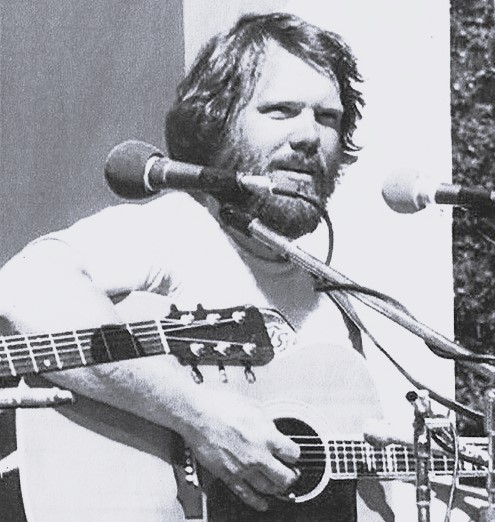
The post of the latest volume of All Pears No Swine this week, including Marlon Williams' fab cover of Bob Carpenter's "Silent Passage" reminded me of some unfinished business. Both when I posted his fabulous and unfortunately only album and then an imagines follow-up I maintained that there was more Carpenter-related material in the vaults for the (too few) converted. Well, here it is, I'm cleaning out my closet. And what I found in it, is a couple of Bob Capenter's very good friends. The reason they all got together was of course a sad one: By the mid-90s Carpenter had more or less wrapped up with the music business and was preparing to become a monk (!), when a cancer diagnosis hit.

I'll be honest with you, I don't recognize a single name on the list of performers here, these are literally his friends, not some more or less well-known admirers of his work rallied to the cause. But that doesn't change the fact that the music in here is very good, both because of the quality of composition courtesy of Mr. Carpenter, but also because musical director Ken Daiglish has assembled a really nice band and group of lead vocalists, including horns and strings sections. If eclectic folk-rock is your gig, then meet Bob's friends. The set list is interesting, as it shies away from his (relatively) known songs like "Gypsy Boy" or "Silent Passage", instead there are several unreleased or rare numbers. Of the lead vocalists, I feel like I should mention Laura Hogan, who makes "Dance The Night Away" sound like a long lost Linda Ronstadt song. Another Highlight is "One More Time" with its acapella opening, before thebband comes in for the chorus. Don Le Roux and the band  bring some Dr. John-style Soutthern fried R'n'B on "Free Delivery Man". And for the suitable epic finale, all ride out on the "Morning Train", which here takes on the quality of a modern gospel. 

The artwork all came with the tracks, which Bob's friends are still distributing via a Facebook page (move over, Boomers!). I just added a couple of bonus tracks, Again, for such a little-known cult figure like Bob Carpenter, there weren't eactly dozens of covers from high profile artists to choose from. Marlon Williams shows up again, with a different version of "Silent Passage", which was actually the first version I heard of him doing that song. It's a live track cut in a moving tramway, with Williams accompanied by then girlfriend & musical partner Aldous Harding. Her beuatiful backing vocals and Williams' fragility make this version as good as the studio version. Ramblin' Wayn is a grizzled old musician doing covers on You Tube, I edited his two Carpenter covers into a medley. If you  listen closely, he sounds a lot like American Recordings Johnny Cash, circa Volumes 3 and 4. And then there is electro-folk (is that a gere?) group C.A.T., a bunch of fellow Canucks covering "Wings". 

There is a breadth of styles on display here on Bob's Benefit that show how eclectic Carpenter could be, instead of being just asddled with a'another guy with an acustic guitar' label, and its also a credit to the band assembked here who pull off a beautiful concert for a wonderful artist. 

So, one more time, one last time, immerse yourself in the music of Bob Carpenter. 


Friday, November 22, 2024

Bob Carpenter Tries One More Time...(And Nobly Fails, One More Time)


Last we talked about Bob Carpenter we relayed the sad, maddening story surrounding the release of his only official record, the amazing Silent Passage. By the time that record came out almost a decade after the initial release date, Carpenter was more or less done with the idea of a successful music career. But he did give it another shot, briefly, discreetly, in the late 1970s. Carpenter went into a studio to cut a number of demos, essentially as publishing demos for other artists, or to possibly entice someone to give him another recording deal after things turned so badly with Brian Ahern and Warner Brothers. Alas, no covering spree of Carpenter songs or recording contracts followed these demo sessions, and so Carpenter floated back into, well, whatever he was doing. The really really last shot was then a couple of years later around the release of Silent Passage, but when that album didn't become a surprise bestseller, Carpenter really was done with the music business. He still gave the occasional concert and contributed a track to an obscure Canadian various artists collection in 1991. But for all intents and purposes, he was done after 1984. 

And yet, and yet, after the initial disappointment and more or less official blackballing in the mid-70s, he did try one more time, and we get One More Time out of it. There's not much info on what made Carpenter return to the studio in 1979 to cut the eight tracks that were released in 2010 by trusty Stony Plain as Eight Demos 1979. But Carpenter clearly intended these to be used or discovered. The sound is crisp and clean, and so is Carpenter's singing voice. The weird, gruff garble on some of Silent Passage looks in retrospective more and more like an artistic choice, as his voice on these songs sounds younger and fresher than on Silent Passage, where maybe he methor acted the 'gruff mountain man from the Canadian plains' persona a little too much. Also, these aren't "a man and his guitar on a tape recorder"-type demos, but rather fully produced. Spare backing all in all, sure, but tastefully done and with just enough little touches to elevate the music above 'only for cultists' level. 

Speaking of the production: You will see that the closing tracks of what would be the a- and b-sides of One More Time are quite different from the rest, no more so than on album closer "Satan's Golden Chain". That song, as well as "Mister Blue" aren't from Eight Demos 1979, but rather a Stony Plain label retrospective published a few years later. Again, I don't have much info on these tracks, but from the sound they clearly come from the 1980s, so my best guess would be that these were recorded as either a prospective promo single or follow-up single to the release of Silent Passage on Stony Plain in 1984. And while the delicate and subtle "Mister Blue" easily slides in with the unplugged feel of the record, "Satan's Golden Chain" looks like the wild card of the pack. 

It also includes all the contradictions of Bob Carpenter in one tidy (or rather:messy) package. The instrumentation is extremy slick, pure mainstream soft rock, with every production touch that an early-to-mid 80s production would imply. But of course Carpenter can not help himself and sabotages whatever (improbable) commercial appeal the song would have by including a yodeling section, several times. That's our Bob. 

One More Time doesn't have the timeless, eerie mystique of Silent Passage, apart from "Falling Night" which could have fit right in. But even these unpublished songs in their unfussy, warm arrangements are titles lesser artists would kill for. How many thousand dudes with an acoustic guitar couldn't come up with a killer tune like "Magdalena", the lovely "Dreaming" or the grooving newly minted title song "One More Time"? These songs are also less of a 'mood piece' type of music as Silent Passage was, so One More Time is an entirely different, but no less pleasant listening experience, maybe even more pleasant in some ways. 

This is great music and deserved to be heard back then. It sure as hell deserves to be heard now. 


Thursday, July 11, 2024

One Album Wonders: He's A Gypsy Boy, He's A Miracle Man, He Is Bob Carpenter

The story of Bob Carpenter is one of unsteadiness, reject, and uncertainty, of wandering through life looking for purpose. Carpenter was half-Ojibway, born into the First Nations tribe on the Northern Ontario Tamagami  reservation, from which an unhappy childhood full of orphanages and foster homes followed. This broken childhood most certainy instilled not only a sense of restlessness but also a strong resistance against being told what to do, something that would ultimately derail his music career before it even began. He went to the Navy, but was discharged for mischievous conduct on drunken shore leave. After some years of rambling and wandering around he ended up in the Yorkville folk club scene of Toronto, where basicall every Canadian folkie paid his dues. 

The story of Bob Carpenter is also that of a man banging his head against the recording industry and its conventions. Trouble started early when finally trying to harness the power of Carpenter's songs into records. Recording sessions with Neil Young's producer David Briggs in 1970-1971 fell apart when they clashed about the direction of his music. Enter producer, fellow Canadian and future Mr. Emmylou Harris Brian Ahern. Recording Carpenter seemingly was like pulling teeth, and the promising partnership soon took a turn for the worse. Ahern believed in Carpenter's songs, but not necessarily in the stark manner Carpenter presented them in. Where Carpenter wanted to,play his songs as simply as possible, Ahern thought bringing in studio cracks and overdubbing embellishments was the way to go. A minor disagreement with Ahern concerning the use of instrumentation and the general 'sweetening' of the record grew into a bigger conflict that finally unraveled Carpenter's burgeoning career. 

Carpenter had also signed with Ahern for the publishing rights of his songs, but that deal was about to expire at around the same time that the release of Silent Passage was scheduled. Ahern insisted that Carpenter resign with him, but Carpenter decided that he didn't want to and tried to hold out for other publishing deals. Though the exact rundown of things is unclear and no one - especially not Ahern - detailledevents, things went something like this: Ahern essentially took Silent Passage hostage, withholding it from release and essentially blackballing Carpenter from the music industry while the conflicts with him weren't resolved. And we're not talking about 'accidentally mislaying the master tape' either, 30.000 copies of the album were sitting in a warehouse ready to ship when Ahern, backed by Warner Brothers, decided to withhold the album. Warner Brothers first postponed, then cancelled the release, with all of those records being melted down a while later. 

When Canadian specialist label Stony Plain finally released Silent Passage in 1984, almost a full decade after its scheduled release, the era of the folky singer-songwriter had long gone the way of the dodo, and so had Carpenter's ambitions of a music career. In 1984 Silent Passage was on first release essentially an archival release. Whatever moment the kind of country-folk and singer-songwriter music had in the early 70s was gone, and so was Carpenter's shot at a career. What's left is Silent Passage, and the music itself.   

So, that orchestration and those backing singers that caused so much strife? Yeah, it's a bit of a mixed bag. Ahern's 'more is more' approach works wonders on opening track "Miracle Man", which faithful One Buck Heads might remember from the very first volume of All Pearls, No Swine. With slide guitar by the late great Lowell George, backing vocals by Emmylou Harris and a fabulously catchy tune, "Miracle Man" does go big and works great. But the slower, more introverted numbers probably didn't need more than a voice and an acoustic guitar. Blame the whole orchestration debate turned fiasco on the times. As a folkie/singer-songwriter on Warner/Reprise in the early 1970s you basically were assured that some string accompaniment was going to end up on your record, with Lenny Waronker's work with Gordon Lightfoot being the prime example.  

Compromised in their form - at least in Carpenter's mind - or not, the songs of Silent Passage are sturdy to withstand whatever embellishments Ahern put on them. The title song is an absolute marvel, with some of my favourite opening lines to any song ever: "Before the war I had no need for traveling / indeed I do not know what made it so important to leave." And the great lines just keep on coming: "Upon this ship of life, we are the mast, the sails and the wind", yet by the end of the song "we are scattered on the oceans once again". Masterpiece, pure and simple. It's sailing and war imagery will be picked up by "First Light" a little bit later on, to almost eually stunning effect.

After the one-two punch of  "Miracle Man" and "Silent Passage" settles into a number of songs, in which the protagonist - an eternal wanderer in search of reason, purpose and companionship - always seems to be at least partly Carpenter himself. "I'm searching always for better wheather", he sings in "The Believer", "I'll chase my shadow 'till I remember". And consider the title character in the backwoods gothic tale of "Gypsy Boy", the song Tony Joe White covered: "I think it's time to leave now, but I don't know where we're going...for I am a gypsy boy, and my home is where you find me."

These observations make it seems like it's some sort of solipsistic record to rival the L.A. mellow mafia guys, but that could not the further from the truth. Carpenter's tone is mystical, all these characters seem to live in a netherworld that is not quite here and not quite elsewhere, vaguely familiar but also strange, both hostile and inviting at the same time. There is something deeply unnowable in Carpenter's words and his songs, a sense of mystery and myth that never completely get uncovered before the listener. Ed Ochs' great essay on Carpenter ponders this and the other enigmas of Carpenter's life and music and is well worth reading in whole. 

But really, it all comes back to that music. Silent Passage is one of the great, way too unknown treasures of North American music from the 70s. So with the miracle man, the gypsy boy, set sail on his ship of life, and see where this Silent Passage takes you... 


P.S.: Even though he is technically a one album wonder, if you like Bob Carpenter and Silent Passage, rejoice: there will be more Carpenter and Carpenter-related material here at One Buck Records. 


Follow That Nice Long-Haired Fella Into The Country Warehouse, He's Got Some Goodies For You...

One of my favorite bootlegs of all time, recorded in the Country Warehouse in Rochester, New York November 25 1988, with the title fittingly...